
Roof Insurance Claims in Midlothian, TX
A storm went through and now you are working out whether this is a claim at all. Roof insurance claims start at Midlothian Roofing Co the same way anything else does: up on the slopes, before anyone writes anything down.
If the roof is open to the sky, call us first and file after.
What the roofer does alongside you, and what stays in your name.
Nothing gets filed before somebody goes up and looks. A roofer walks the roof plane by plane, photographs it, and dates the photos to the storm they belong to. That record is what a carrier reads, claim or no claim. Ellis County takes hail most springs, and the hail damage guide carries the dates.
Then you get told what is wrong, not what would make the biggest claim. Plenty of roofs carry real hail marks that are not worth a deductible, and better to hear it now than from an adjuster later. When the adjuster comes out, a roofer meets them on the roof.
None of that changes whose claim it is. You file it, you decide what to accept, and it stays in your name. Midlothian Roofing Co's part is smaller than that: it passes your details along, and the roofer documents the roof.
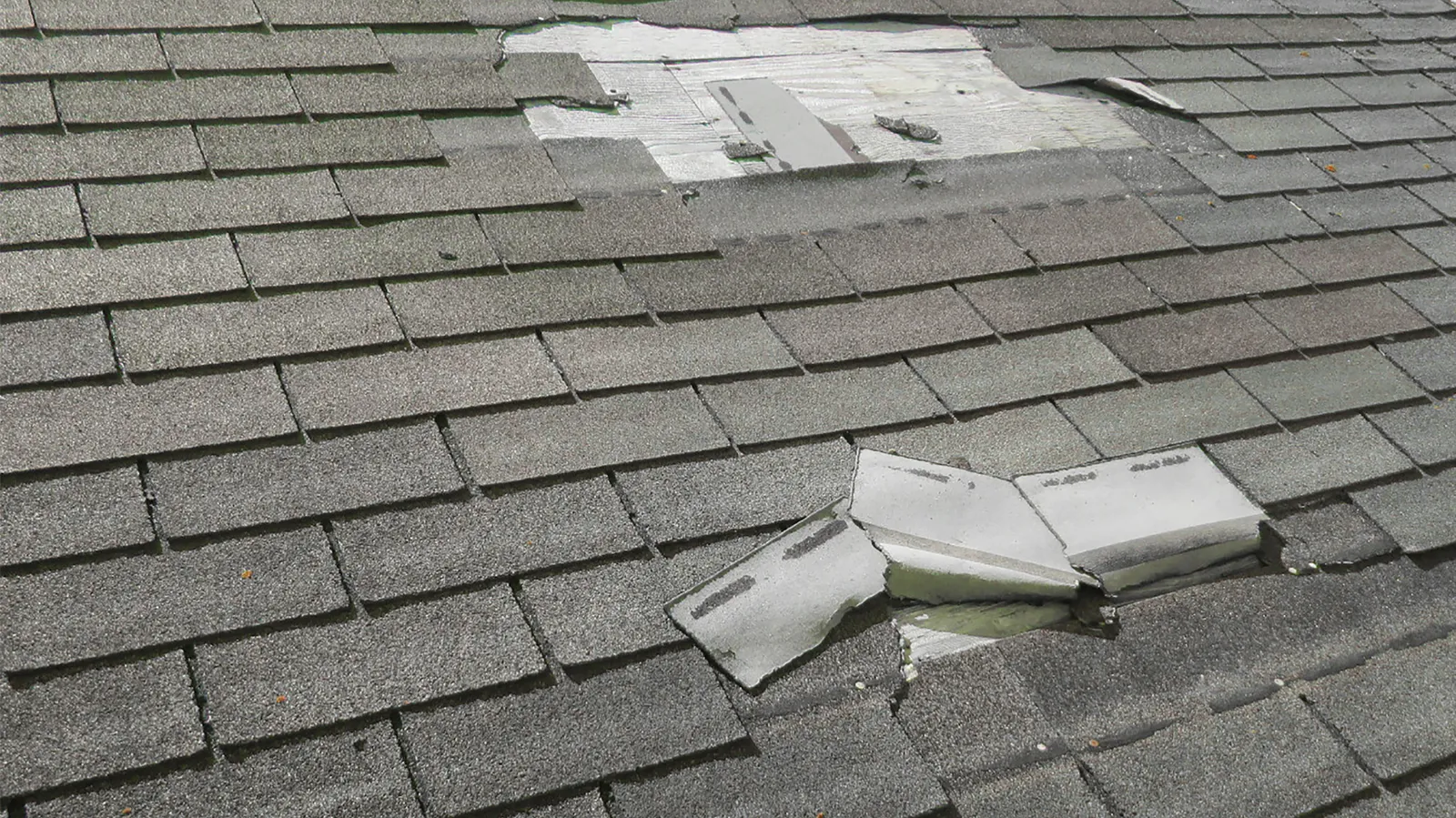
Signs a roof is worth a claim, and signs it is not.
Not every mark on a roof is a claim, and some of the worst hail damage is invisible from the ground. Six of the things a roofer reads on the way to that answer, honest in both directions.
- Bruises that give underfoot: A hail bruise is a soft spot where the mat under the shingle cracked, and that is claim territory. You can feel them across a slope before you can see them.
- Creased shingles after wind: A shingle lifted and laid back down keeps a crease across it, and its seal is broken for good. Those turn up in runs along whichever edge faced the gust.
- Fresh dents in soft metal: Gutters, vent caps and the mailbox dent before shingles bruise, so they date the storm and size the hail. An adjuster reads them the same way a roofer does.
- Granules in the downspout: On their own these usually read as age, and a carrier will read them as wear. A roof sheds grit slowly for years before anything is wrong with it.
- One curled slope, aging roof: Curling on the sun side of an old roof is the roof finishing its life, and that gets denied as wear and tear. Filing it costs you the trip and gets you a no.
- A leak with no storm: A vent boot that dried out or a flashing that was never right will leak on a calm week, and that is a repair rather than a claim. Those usually cost less than a deductible anyway.
Six items on a list will not settle it either way, because the answer is on the roof rather than in the list. If you are not sure which side yours falls on, call us and say what you are seeing. Some of these end in a repair, some in a full replacement, and some in nothing at all. No hard sell, and nobody rushes you toward a claim.
Who does what, once a claim is on the table.
The split matters, because one of these columns is yours by name and cannot be handed to a contractor. Here is the whole process laid against it.
Every carrier and every policy runs its own rules, so read yours before you file.
The questions that come first.
These five come up on nearly every storm call in Midlothian. Where the true answer depends on your own policy, it says so.
Q1Will filing a roof insurance claim raise my rates?
Q2How long do I have to file a hail damage insurance claim in Midlothian?
Q3What if the adjuster says no?
Q4Do you handle the claim for me?
Q5Is the roof inspection free?
Get a free roof insurance claims estimate
Before you call your carrier, have a roofer get on the roof and photograph what is there. If it turns out there is nothing worth filing, you hear that instead, and if it does become work, the workmanship warranty on it belongs to the roofer rather than your carrier.