
Chimney Flashing in Midlothian, TX
Find out whether the flashing let that water in before you pay a mason to chase it. Sealant, a missing second layer, and a leak that starts up the slope look the same from your ceiling in Midlothian.
If it is running in right now, call and say what the ceiling is doing.
Why the leak shows up at the chimney and nowhere else.
A chimney is the largest hole anybody deliberately cuts in a roof. Water coming down the slope arrives at a masonry wall it cannot get through and cannot get over, so the only thing standing between that water and your ceiling is metal doing the diverting.
The metal comes in two layers, and movement is the reason. Base and step flashing weave in with the shingle courses up both sides of the chimney. Counter flashing is cut into a mortar joint above and laps down over the top of it.
That overlap lets the brick and the roof move in opposite directions without ever opening a gap between them. Sealant standing in for that second layer is the single most common thing a roofer finds behind a chimney that leaks.
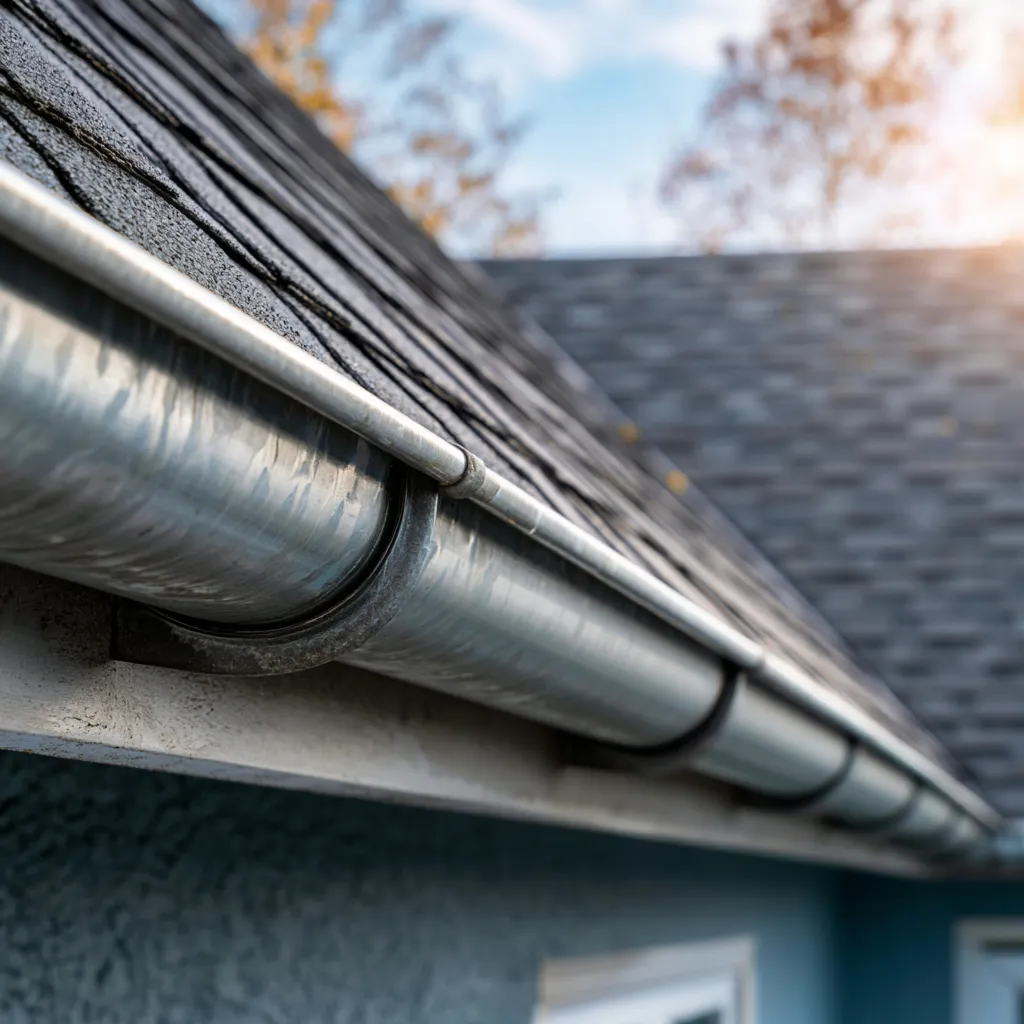
What chimney flashing work in Midlothian covers.
Two layers of metal, one masonry wall, and a deck underneath that has probably been wet longer than the ceiling has. A job covers as much of that as the roof turns out to need.
- 01Step pieces woven in
- One per course, each lapping the one below, fastened to the deck. Water crosses every step piece on top of metal, which is why they are woven in rather than run as one long length.
- 02Apron and head flashing
- The metal below and above the chimney, where driving rain does its worst. The apron takes everything shedding off the chimney face, and the head flashing takes everything the slope sends down at it.
- 03Counter flashing cut in
- Let into the mortar joint above so both layers can still move. Brick and roof deck shift against each other through the year, and that overlap absorbs the movement without opening a gap.
- 04A cricket behind wide chimneys
- A small framed peak that splits runoff instead of letting it pond. Anything wider than about two feet collects water and debris on its uphill side without one.
- 05The decking underneath
- Opened and checked; sheathing goes wet long before a ceiling shows it. The wood directly behind the chimney softens first, because that is where the water has been sitting.
- 06Masonry named as found
- Cracked crown or soft mortar gets its own line, as mason work. Counter flashing needs a sound joint to lock into, so bad mortar has to be dealt with before the metal goes back.
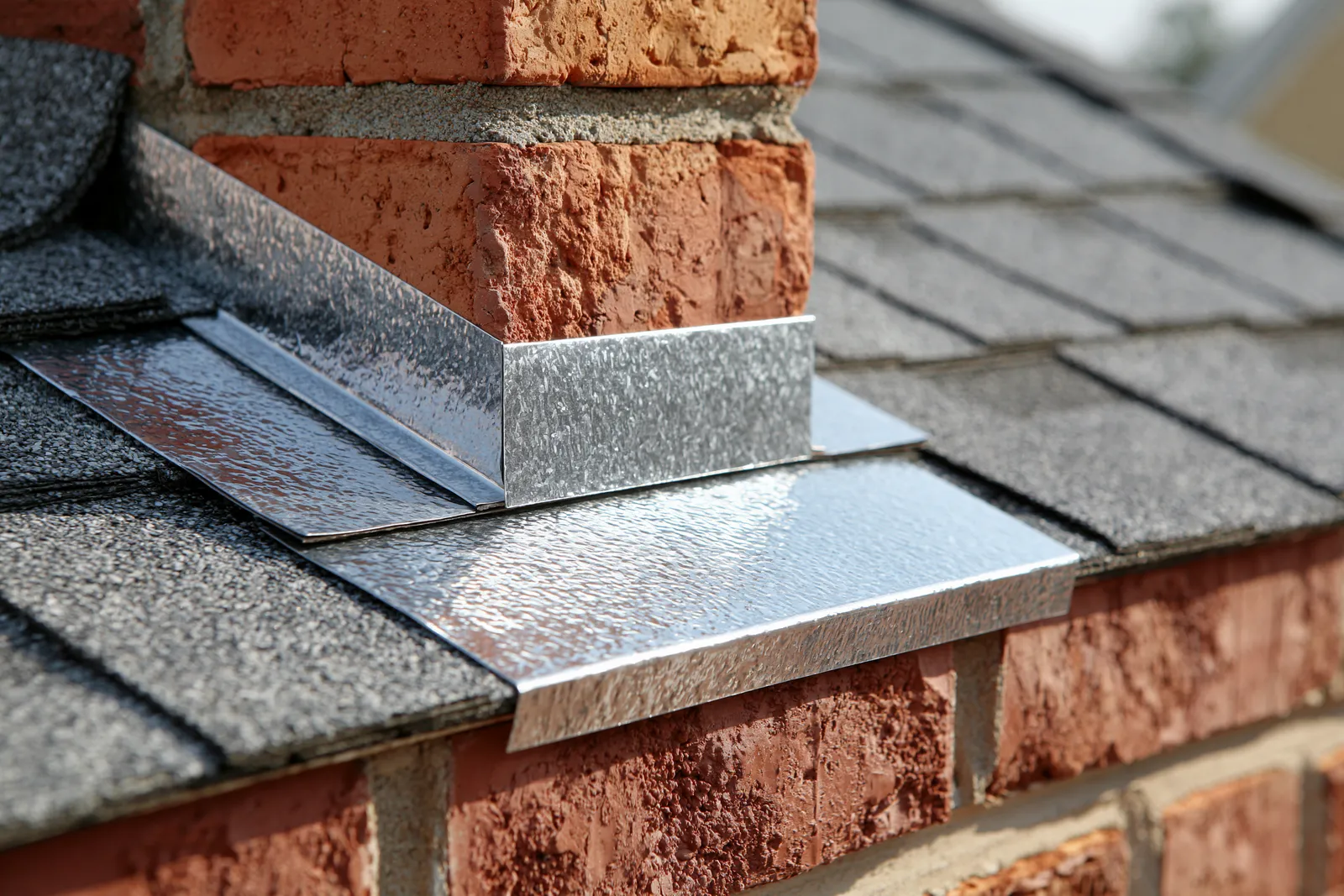
The shingles beside a chimney age in the same weather the metal does. Where both have gone, it is one visit and one scope, and that is what a roof repair is.
How a Midlothian chimney reflash goes.
Confirming what is wrong here takes longer than fixing it does. The first move is what keeps you from paying for the wrong repair.
Confirm the chimney
A ceiling mark beside a chimney is not evidence the chimney did it. The roofer works the slope above it, the vents and pipes nearby, and the underside of the decking before settling on a source.
Open the courses
Shingles come up along both sides so the existing metal is visible, along with whatever was or was not cut into the mortar. It gets photographed as found, before anything is disturbed.
Set it back in order
Base and step pieces go in with the courses, then counter flashing into the mortar joint over the top, overlapping, each piece free to move. The roof closes back around the new metal, and what went wrong before is named on the same estimate as the work that fixed it.
Signs the flashing is what let the water in.
None of these prove it on their own. Two or three of them together, and the metal is where a roofer starts looking.
- A stain on the chimney wall: the mark comes through on the wall the chimney runs up, not out in the middle of the room. That places the entry at the chimney.
- Rust streaking down the shingles: old galvanized metal giving out from the top, leaving a stripe below the chimney. Once the coating is gone the metal thins from both faces, and the rest of the run is the same age.
- Roof cement smeared at the base: somebody already tried to buy time here, so the leak is not new. That cement also hides whatever is under it, which is why the courses come up before anything is quoted.
- Metal sitting on the brick face: counter flashing surface mounted instead of cut in has nothing holding it in place. A bead of sealant along the top edge is doing the whole job, and a Texas summer takes that out first.
- A damp chase in the attic: the wood around the masonry is discolored or soft, which puts the leak well ahead of your ceiling. A chase can hold damp for a year or more before anything shows in the room below.
- A wide chimney, no cricket: with nothing on the uphill side, every storm piles runoff against the brick. Leaves and grit collect in the same place, holding water against the joint long after the rain stops.
An active leak is worth a phone call: (972) 954-1262. A stain that only turns up in certain storms can go through the form with a photo, and either way it reaches a roofer who covers Midlothian.
What a chimney reflash runs.
Nationally, resealing metal that is still sound and still set correctly runs about $150 to $250. Most flashing repairs land between $200 and $600, and a full rebuild of the flashing around a chimney generally starts near $600 and climbs from there.
Which of those your chimney is comes down to its width, whether a cricket is going in behind it, and what the mortar and the decking turn out to be once the old metal is off.
See what drives the price- A chimney mid slope costs more to flash than one at the ridge
- Wet decking under the old metal is priced once it is uncovered
- A cricket adds framing and metal on the wider chimneys
What Midlothian chimneys tend to be built like.
Midlothian did not arrive gradually. It came in waves, and each wave left a different kind of chimney detail on the roof.
- 01The 2004 middle of town
- The typical house here dates to 2004, and roughly a third of the city followed within that decade. Flashing that age is now old enough to be the reason a roof leaks.
- 02The 2018 to 2024 build
- A large share of Midlothian went up in those years. On a roof that young, a chimney leak points at how the metal was set far more often than at wear.
- 03The original 1880s streets
- The oldest blocks sit on the townsite platted in the 1880s. Masonry and roofing there have been added to over generations, and the counter flashing may never have been cut into a joint at all.
- 04What storms do to metal
- The county's last four years carry 17 hail days and an 85 mph gust. Soft metal keeps a clear record of both, which is part of what gets photographed after a storm.
None of that decides anything about your house. A roofer standing beside your chimney can see whether the two layers overlap the way they are supposed to, and that is the only answer this page is after.
Chimney flashing questions Midlothian homeowners ask.
A stain near a chimney sends most people looking hard at the brick. These are the questions that follow once the metal comes up instead.
Q1Can the flashing just be sealed instead of replaced?
Q2Why does the leak only happen in certain storms?
Q3Is this a roofer job or a mason job?
Q4Can the flashing be resealed instead of replaced?
Q5The chimney is not used anymore. Does the flashing still matter?
Q6Water is coming in at the chimney right now. What do I do?
Get a free chimney flashing estimate
Say where the stain is and which storms bring it out. The courses beside your chimney come up, you see what that metal has been letting past, and the whole job gets scoped before anything is rebuilt, the gutters below it included. No runaround: you hear what it is and what it costs.