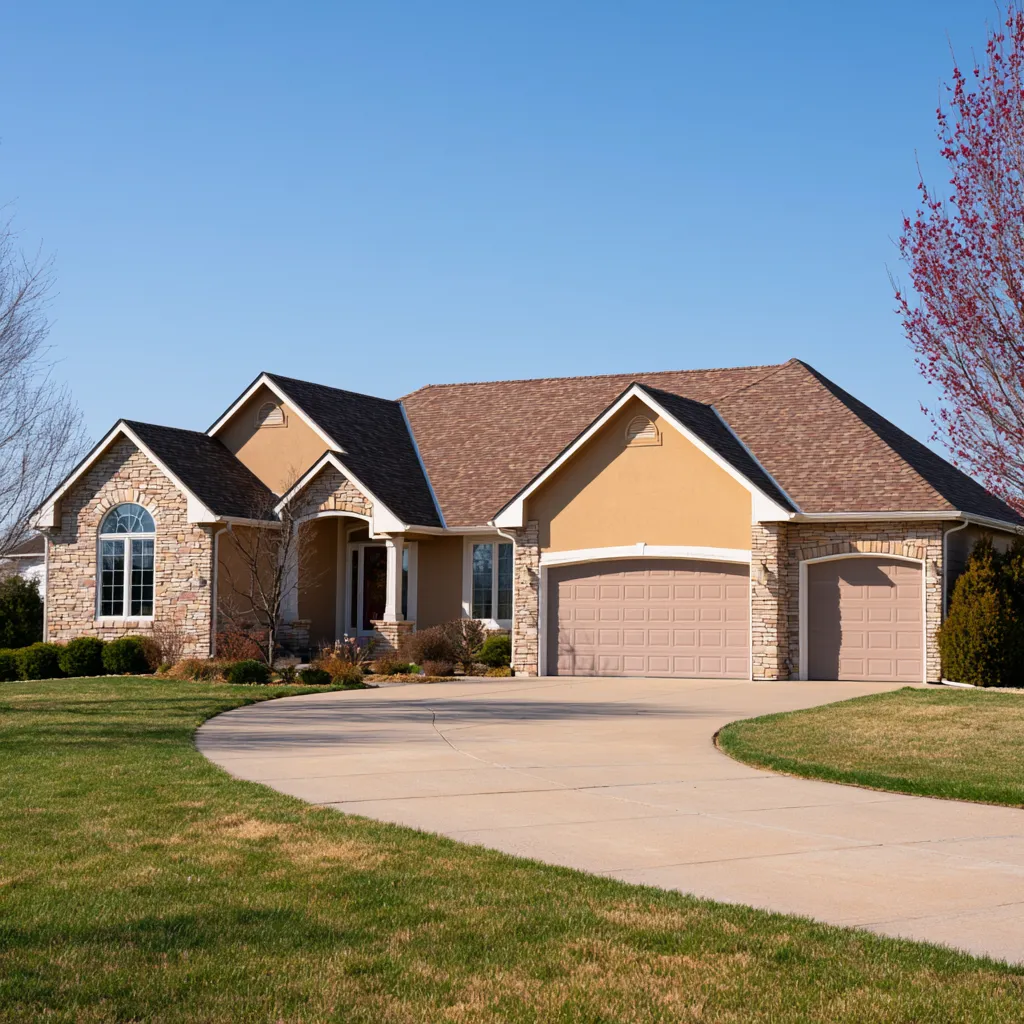
Roof Ventilation in Midlothian, TX
Find out why the upstairs runs hot before another summer ages your shingles from below. In Midlothian the missing half is usually intake at the eaves, not exhaust at the ridge.
Why a Midlothian attic gets hot enough to age the roof from below.
Air moves through an attic the way it moves up a chimney, and only if it has both a way in and a way out. It comes in low through the vents in the soffit under your eaves, travels up the underside of the decking carrying heat and moisture with it, and leaves high at the ridge. Take away either end and the whole current stops.
A stalled attic is how a North Texas August does its damage. The deck holds heat against the shingles hour after hour, and they cook from the side nobody looks at. Most people first hear the word during a roof inspection, because there is nothing to see from the yard and nothing to feel until an upstairs room stops holding temperature.
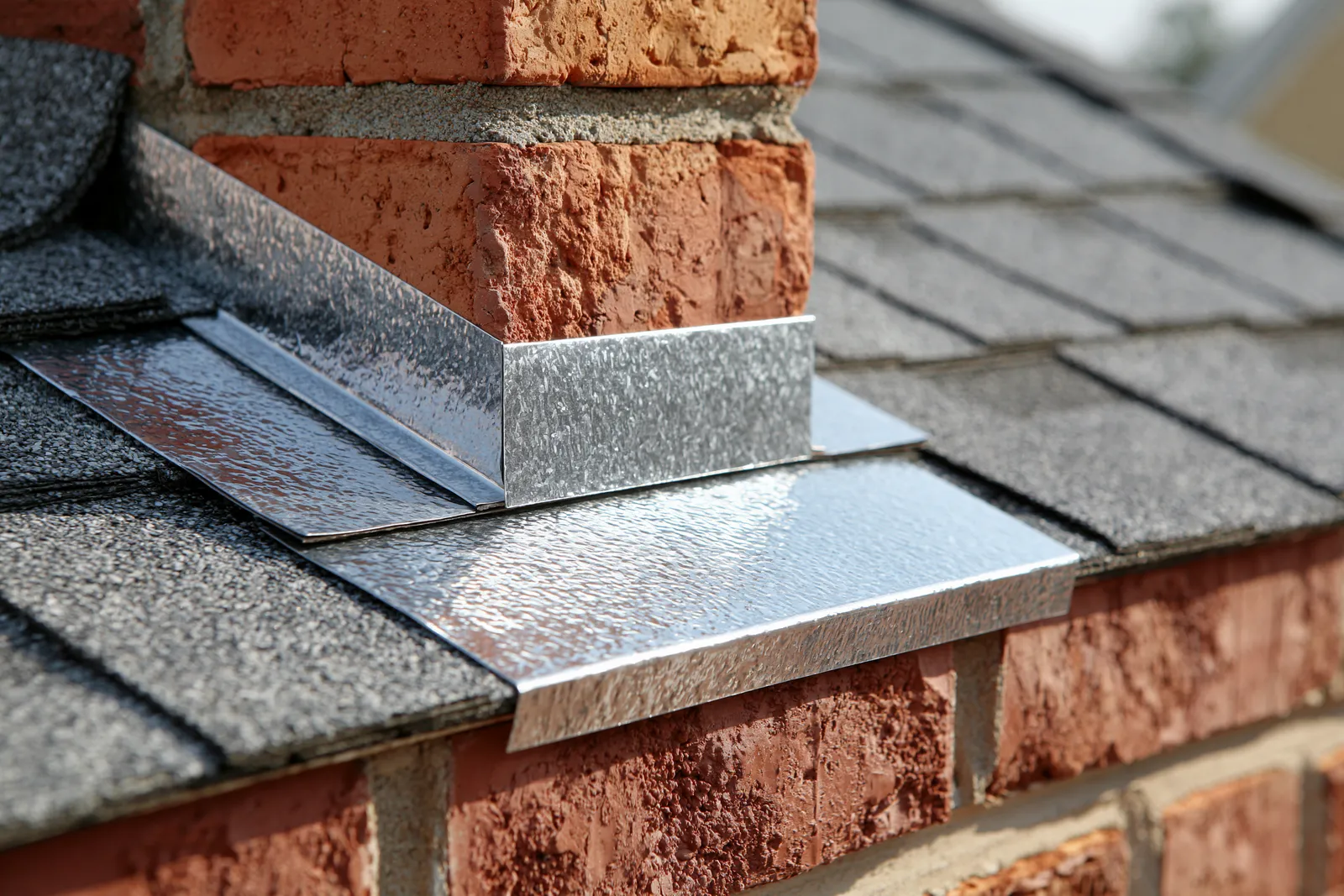
What a Midlothian roof ventilation job covers.
Everything on this list is either a measurement or a piece of hardware. The measuring comes first, because the numbers decide the hardware.
- 01The attic measured
- Floor area and the vent openings already up there, written as square inches. Square inches is the unit code works in, so the existing openings and the target end up on one scale.
- 02Every eave checked for intake
- Panels painted shut, packed with insulation, or vented outside but never opened behind. All three look like working intake from the driveway, and none of them move any air.
- 03One exhaust type, up high
- Ridge vent, box vents or a turbine, and only one kind per attic. Which type suits the house depends on how much continuous ridge there is up there to work with.
- 04Baffles at the eave
- Channels that hold insulation off the deck so incoming air has a lane. Blown insulation creeps forward over the years and closes the eave, which is what the baffles are there to prevent.
- 05Both numbers written down
- Intake area against exhaust area, so you can check the balance yourself. Both figures go on the estimate, and the shortfall between them is what the work is priced to close.
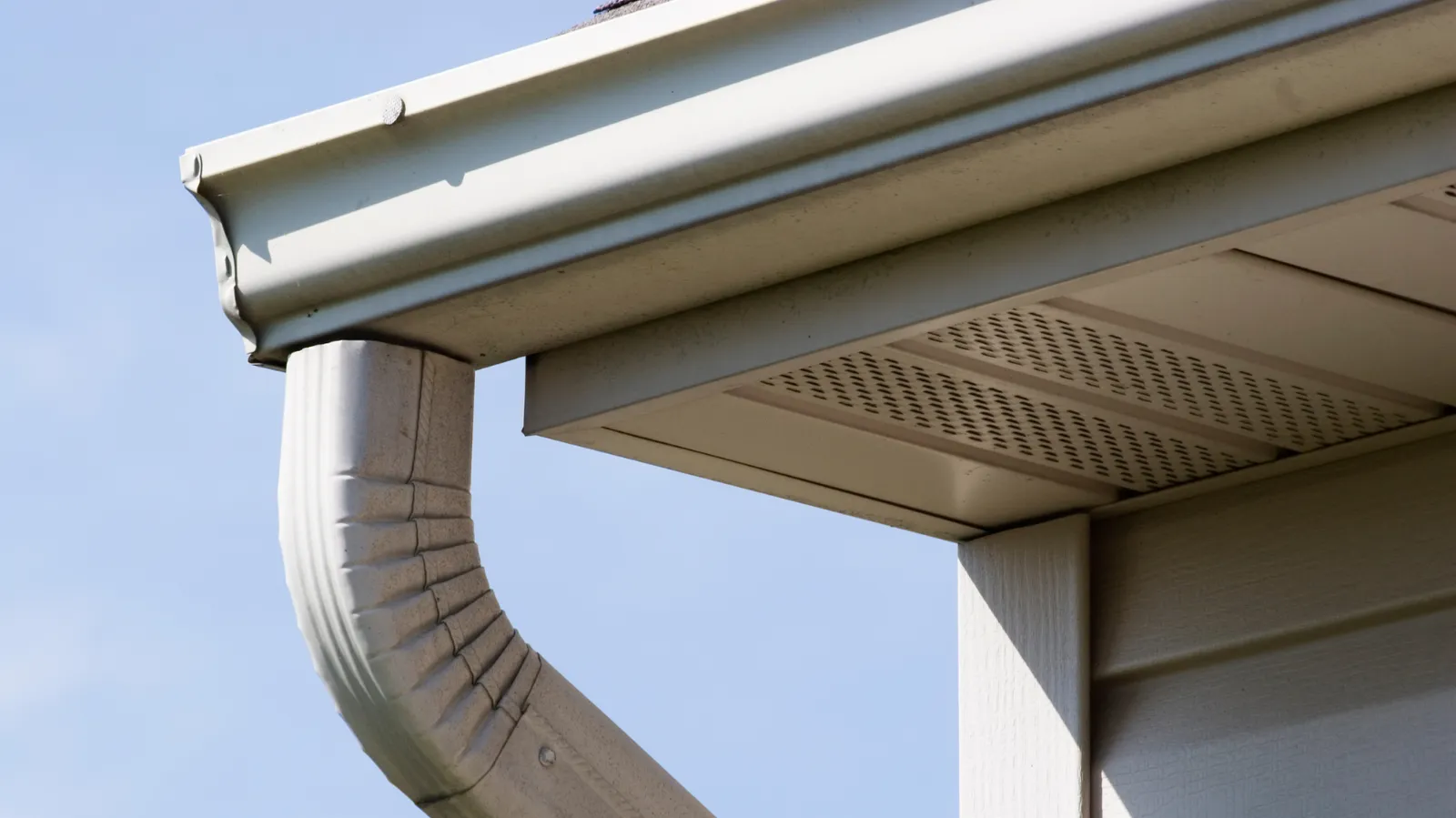
Code sets the vent area as a proportion of your attic floor, and halves that figure when intake and exhaust are properly balanced. The exact proportion is a city question, so a roofer confirms it with Midlothian before pricing. Where the shingles are near the end anyway, roof replacement is when this gets put right for good.
How a Midlothian ventilation correction runs.
The order is the whole trick. Do these three out of sequence and the attic ends up worse off than it started.
Measure before cutting
The roofer starts inside the attic. Floor area gets measured and the existing intake and exhaust get counted, so what comes out is a target number instead of a guess about how many vents to add.
Intake first
An attic cannot push out more air than it can draw in, so blocked soffits get cleared or new intake gets cut before anything happens at the ridge. Adding exhaust to a starved attic widens the gap instead of closing it, which is why the cheap version of this job fails so reliably.
Then one exhaust type
Ridge vent under the cap where the ridge runs long enough, static vents where it does not, and any mixed setup taken back to a single kind. Two types on one attic pull against each other, and the eaves end up feeding neither.
Signs your attic is not breathing.
Ventilation announces itself indoors, often years before anything about the roof looks wrong from outside. The six below all start in the house or the attic, which is why nobody spots this one from the yard.
- An upstairs that never cools: the rooms under the attic run hot all summer and the air conditioner never gets ahead of it. A stalled attic holds heat against the ceiling below it well into the evening.
- Shingles curling or blistering early: a roof wearing out years short of its rating has usually been cooked from underneath. Heat damage traced back to a starved attic can also put a manufacturer warranty at risk.
- A musty attic or damp insulation: moisture that should have left at the ridge is settling up there instead. Household air carries moisture up through the ceiling all winter, and it needs somewhere to go.
- Rust on the decking nails: the nail points show a winter of condensation long before the wood does. The nail is the coldest thing up there, so it is where the moisture gathers first.
- Soffit vents painted or packed shut: the intake half is closed, and no amount of exhaust makes up for it. A painter with a sprayer can close every one of them in an afternoon.
- A dark band across the decking: standing moisture sitting over a long stretch of deck. The band usually runs along the low end of a plane, where the damp air settles.
Every one of these has an innocent explanation on its own. Three of them together is airflow almost every time, and it is a smaller bill than what a cooked deck turns into. If your upstairs has been losing that fight for a couple of summers, call and say so, and our roofers can tell you what usually causes it.
Where ventilation lands on a roofing bill.
There is no flat number for this one, and that is not evasion. Clearing blocked soffit vents and setting baffles is an afternoon. Cutting continuous intake along every eave and running new ridge vent the length of the house is a different job entirely, and what separates them is linear feet.
Most ventilation gets corrected during a replacement, when the ridge is off and the eaves are already open. Standing on its own, it is priced to the work in front of it.
See what drives the price- Linear feet of eave and ridge drive the number here
- Blocked intake costs less to clear than to rebuild
- During a tear off the edges are already open
What Midlothian roofs mean for ventilation.
This city was built fast and mostly at once, so a great many attics were put together on the same assumptions and are hitting the same wall at the same time.
- 01Roofs built around 2004
- Half of Midlothian is newer than that. Ridge venting was already normal by then, so the shortage around here is nearly always on the intake side.
- 02A third from the 2000s
- About a third of the town's houses went up in that one decade. Those attics have had long enough for blown insulation to creep forward over the soffit vents and close them off.
- 03Houses lived in by owners
- Most homes here are owner occupied, so whatever was set up at build is usually still exactly what is up there.
- 04Ridge vents after a storm
- Seventeen hail days sit on the county's last four years, and a beaten ridge vent is a quiet way for an attic to stop exhausting. Storm work itself lives on the hail and storm damage page.
Build year is where you start, not where you finish. Two houses framed the same season can breathe completely differently, depending on how much insulation has moved in the twenty years since.
Roof ventilation questions.
Most people meet this subject in an inspection report. These are the questions that follow it.
Q1How do I know if my attic has a ventilation problem?
Q2Will adding more vents fix a hot attic?
Q3Can a ridge vent and box vents work together?
Q4Does ventilation affect my shingle warranty?
Q5How much ventilation is my attic supposed to have?
Q6Do I have to book this on its own?
Find out what the attic has been doing
Tell a roofer what your upstairs does in August, and what the attic looked like the last time you were up there. Both halves get measured, and what comes back says what is short, by how much, and what correcting it costs. The answer is yours either way, and you can correct it now or fold it into a replacement and decide later.