
Gutters in Midlothian, TX
Gutters in Midlothian, TX do their whole job in about twenty minutes of hard spring rain, and get ignored the rest of the year. Our roofers go up to measure the runs, test the wood behind them, and size the trough to the roof above it.
Where your roof stops and the gutter takes over.
A roof has exactly one job with water, which is to move it downhill to the edge. Gutters in Midlothian, TX pick it up from there. That handoff is a hard line: everything above it is roofing, everything below it is drainage, and most of what homeowners notice starts right at the seam between the two.
Which is why gutter problems rarely announce themselves as gutter problems. They show up as a gray streak down the siding, or a rut chewed into a flower bed, and the gutter is the last thing anyone suspects.
What a Midlothian gutter job covers.
A gutter job here covers six things, and they range from an afternoon to a full replacement. Which of them apply comes down to whether the trough is failing or the board behind it is.
- 01Seamless runs formed on site
- Rolled to each eave's length, so joints land only at corners. Every joint is a place a gutter can eventually leak, so fewer of them means fewer future problems.
- 02Trough size and pitch
- Five-inch handles most houses; six-inch goes on big, steep, cut-up roofs. Going up a size costs less than it sounds like, because the labor is identical and only the coil changes.
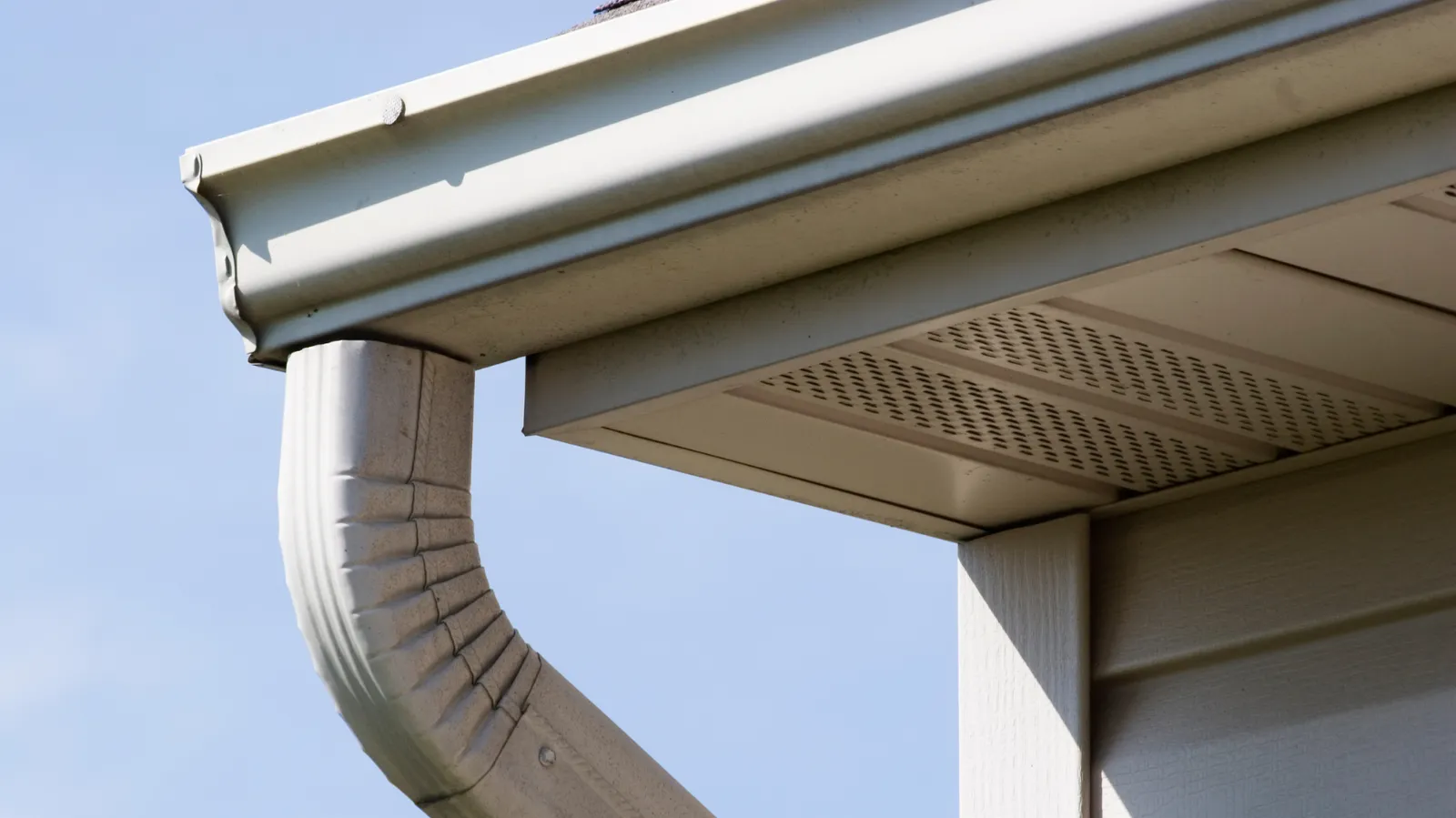
- 03Downspouts and outlets
- Half the system. A big trough with one small outlet still overflows.
- 04Discharge clear of the slab
- Extensions or splash blocks carrying water well away from the foundation. Splash blocks shift over a couple of seasons, so they are worth a look whenever the gutters get cleared.
- 05The fascia underneath
- Checked and repaired first, because fasteners do not hold in soft wood. A rotted length prices separately, since the board has to come back to solid before a new run can hang.
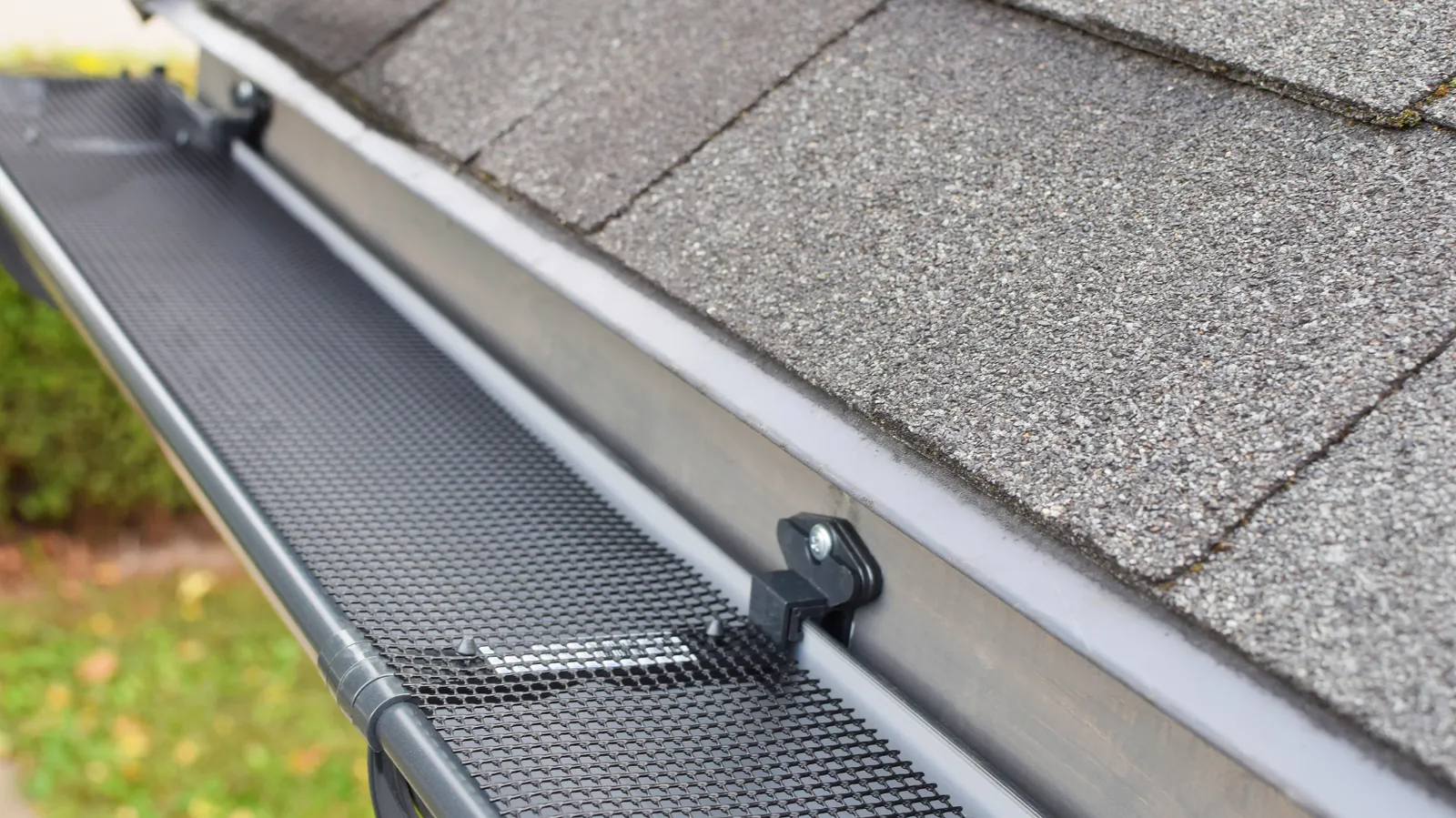
- 06Guards, where they help
- Screen, mesh, or micro-mesh, and what each one lets past. The right choice depends on what is falling on the roof, which is a different answer under a pecan than on an open lot.
Which of these you need depends on what is hanging up there now, and that is usually a five-minute answer once somebody is on a ladder.
How the roofer measures and hangs a Midlothian gutter run.
Sizing a gutter run starts with watching where the water goes. The measuring only comes after the watching.
Read the water
A roofer walks the eave line looking for overflow marks, wash streaks, and the rut under the drip line. That pattern says whether this is a clog, a pitch problem, or a trough that was never big enough for the roof feeding it.
Test the wood
The fascia gets a hand and a probe before anything is ordered. Soft board comes off first, because a new run hung on it starts sagging inside a season.
Form it and hang it
Coil runs through the machine in the driveway and goes up in one piece per eave, pitched so it drains properly, with downspouts set where the water collects and the discharge landing well out from the house.
Signs your gutter line is the problem.
One of these is worth a look. Three of them together is usually the system, not a cleaning.
- Water sheets over the front lip: the trough is clogged, out of pitch, or undersized for the roof above it. Watching one downpour sorts it, since a clog spills at a single spot and a sizing problem spills along the whole run.
- Gray streaks down the outside face: water has been going over the edge long enough to carry grime with it. The streak marks where it happens, which narrows the search to one length of trough.
- The line dips between hangers: the board behind it has gone soft and the fasteners are pulling loose. Rehanging into that same wood will not hold, so the fascia gets dealt with first.
- Water still standing days later: lost pitch or a blocked outlet, and the weight worsens the sag. Standing water is heavy enough to pull the hangers further out of line every time it fills.
- A rut in the bed below: the drip line is landing on dirt instead of going into anything. That is either a missing length of trough or a run that spills in the same place every storm.
- A damp or musty garage: an above-ground drainage problem showing up at ground level. Garages usually sit at the low corner of a lot, so whatever the downspouts miss ends up against that slab.
None of this waits for a storm. If somebody is going to be up there anyway, a free inspection covers the whole roof edge, trough and drip edge and fascia together. If yours are doing one of these already, a quick call is enough to get somebody out to look at the run.
What gutters run on a Midlothian house.
A gutter run is priced on how many feet of it there is, what the material is, how high it hangs, and what has to be repaired behind it before anything can be fastened. Aluminum, steel and copper sit far apart on that list, and copper is its own decision.
What moves the number after it is written is the fascia. An estimate that names a rate for board replacement up front is a finished document; one that leaves it out will produce the same number later, with less warning.
Start a gutter estimate- Vinyl sectional is cheaper and gives up about a decade.
- Two-story runs cost more than ground-floor ones.
- Rotted fascia prices separately, since it comes first.
What Midlothian rain asks of a gutter.
Spring here comes down in short, hard bursts, and burst intensity is what a trough gets sized against. A run that handles a gentle soak pours over the front in the first ten minutes of a downpour.
- 01Newer streets, bigger roofs
- The subdivisions built between 2018 and 2024 brought long runs and cut-up rooflines that push some elevations up a size.
- 02Clay under the slab
- This is Blackland Prairie soil, which swells wet and shrinks dry, so where the downspout lets go matters as much as the trough above it. The city can confirm the discharge distance it currently expects.
- 03Older streets, simpler roofs
- The oldest houses in town carry smaller, plainer roof planes and ask less of a gutter than a new two-story does.
- 04Hail dents trough too
- Seventeen hail days and 80 reported stones sit on the county's last four years, the biggest close to four inches. Hail that bruises shingles flattens aluminum trough on the way past, which is why gutters belong in the same hail damage conversation.
None of that settles the size on your house. The roofer works that out up on the roof, run by run.
Gutter questions Midlothian homeowners ask.
Gutters get ignored until the one afternoon they cannot keep up. Here is what people ask once that afternoon has happened.
Q1Do I need five-inch or six-inch gutters?
Q2Are gutter guards worth it?
Q3Should the gutters be replaced when the roof is?
Q4Can hail damage to gutters go on a claim?
Q5How long should gutters last?
Q6Is this a cleaning or a replacement?
Start where the roof hands off
Send the address and say what the gutters do in a hard rain, or call and describe it. Either way a roofer measures the runs, looks at the board behind them, and puts the size and the price in writing before anything comes off the house. No hard sell over a gutter run, ever.